Home ProductsOur experts uncover key changes in consumer lifestyles and product development shaping the global home products market landscape; looking across home care, home and garden and pet care.
The global home and garden industry reached around USD1.3 trillion in 2025, but demand remained subdued as weak consumer confidence, softer housing transactions and ongoing economic pressure weighed on spending.
The market declined by 0.4% year-on-year and is expected to remain broadly flat through to 2030.
Source: Euromonitor International
Despite this stagnation, underlying shifts are reshaping the industry. Growth is emerging in smaller, more affordable upgrades, multifunctional solutions, second-hand channels, AI-supported shopping and diversified business models. Geographically, demand is also shifting towards emerging markets such as India, Turkey, Malaysia, the United Arab Emirates and Brazil.
Creating a home oasis with minimal funds
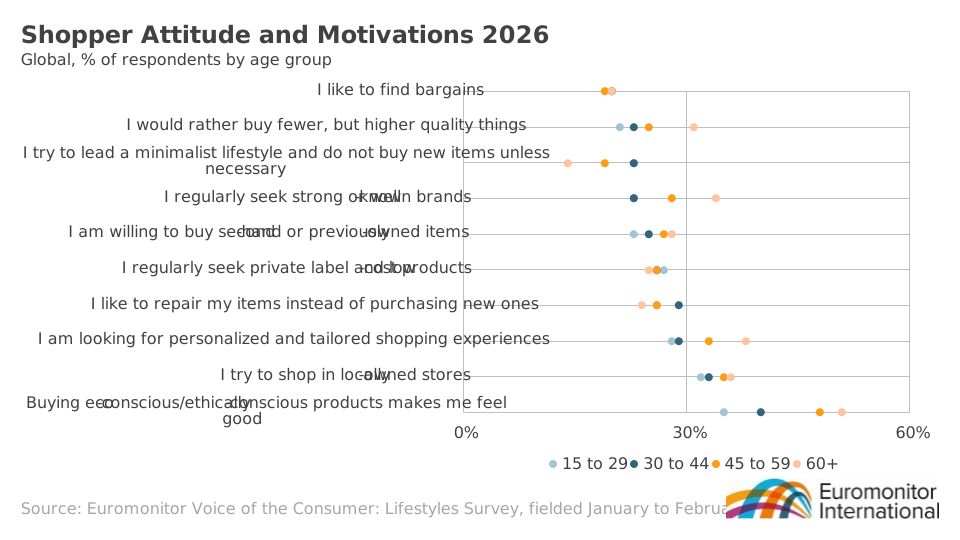
Consumers remain committed to home improvement but are more cautious, with spending on home and garden goods growing by under a 1% CAGR in 2025-2030. Large renovations and high-ticket purchases are being replaced by smaller, lower-cost upgrades delivering quick results. Categories like decorative paint, indoor plants and garden accessories benefit from enabling visible change with limited spend.
This reflects a shift towards gradual spending, with consumers making smaller, frequent purchases instead of one-off investments. While this supports engagement and repeat purchases, it puts pressure on high-value segments linked to renovation cycles.
Multi-crisis environment puts strong impetus on business diversification
Companies are responding to a prolonged period of disruption driven by inflation, tariffs, supply chain instability and weak housing markets. 34% of global industry professionals say that changes in tariffs, regulations and taxes have extensive impact on their Diversification is becoming essential, with firms reducing reliance on single markets, sourcing routes or sales channels.
Vertical integration is becoming a solution to secure supply and control costs. Expanding geographically or strengthening private label and digital capabilities further strengthens business resilience. For consumers, this translates into more varied pricing options and increased availability of alternatives such as private label or locally sourced products. For businesses, competitive advantage will increasingly depend on resilience, operational flexibility and the ability to adapt to volatile market conditions.
City dwellers combining practicality with aesthetics
Urbanisation and smaller living spaces are reshaping product needs, with consumers seeking solutions that are both functional and visually appealing. Multifunctional designs – such as storage-integrated furniture, modular units and space-saving solutions – are becoming essential. As homes serve multiple purposes, products combining flexibility and design gain traction, especially in high-rent, space-constrained markets. This trend extends beyond furniture to kitchenware, lighting and storage. With affordability pressures persisting, demand for space-optimising solutions that maintain aesthetics is set to grow further.
Standing out with AI assistance
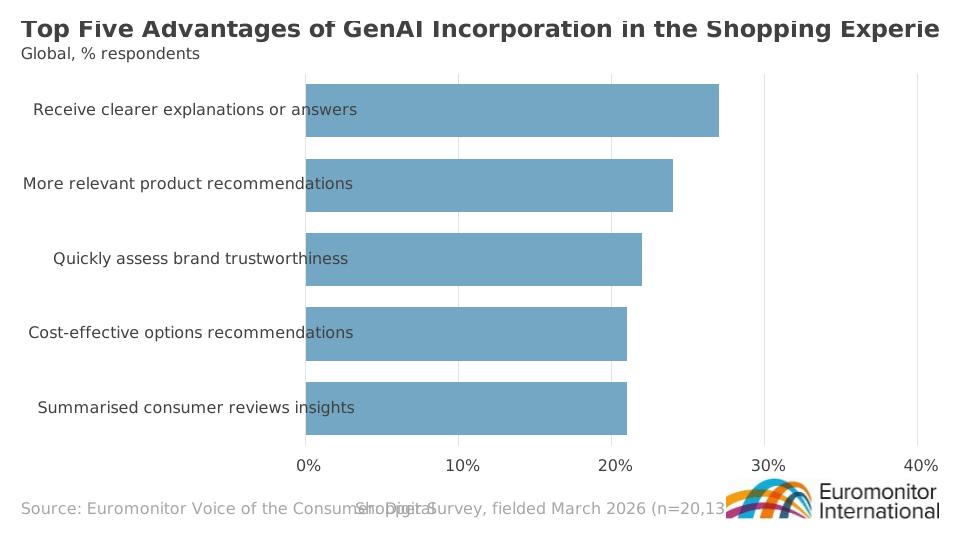
The growing complexity of home and garden retail is driving adoption of AI tools. With wide assortments and fragmented brands, consumers need guidance; AI solutions – such as personalised recommendations, visual planning and virtual assistants – simplify decisions and boost confidence.
It is especially important in home improvement, where expertise gaps can deter purchases. AI can replicate in-store advice, offering tailored guidance and visualisation. As digital becomes central, AI is shifting from a value-add to a necessity, improving engagement, conversion and loyalty, while laggards risk commoditisation in a digital-first market.
Pre-loved home items help balance rising costs
The second-hand market is becoming more structured and influential in home and garden, evolving from informal peer-to-peer activity to organised ecosystems with marketplaces, trade-ins and brand-led buy-back schemes. Consumers, especially younger generations, embrace pre-owned goods to save costs while maintaining quality and style, reflecting an economic and behavioural shift. Rising rental rates and transient lifestyles also support flexible, lower-commitment purchasing. Resale poses both risks and opportunities: it may divert demand from new products but also extends product lifecycles, strengthens relationships and taps into sustainability-driven demand, making participation increasingly important.
Future of home and garden focused on resilience and selective growth
The outlook remains subdued, especially in mature markets constrained by weak housing and discretionary spending. Demand is shifting, not disappearing, with growth concentrated in lower-cost segments, emerging markets and new consumption models. Countries like India and Brazil will drive expansion through rising incomes, urbanisation and housing.
Consumers are prioritising affordability, flexibility and practicality, reshaping product design and sales. Success will depend on aligning with these needs – focusing on affordable upgrades, multifunctional solutions, digital engagement and diversified operations in a market defined by cautious spending and structural change.
This report explores how home care distribution is evolving across offline and online channels worldwide. It examines the continued dominance of physical…
Growth in home care is increasingly driven by changing household behaviours and expectations. This report examines five key developments: the influence of pets…
This report examines the size, performance and future outlook of the global home care industry, analysing category, regional and country-level trends,…